


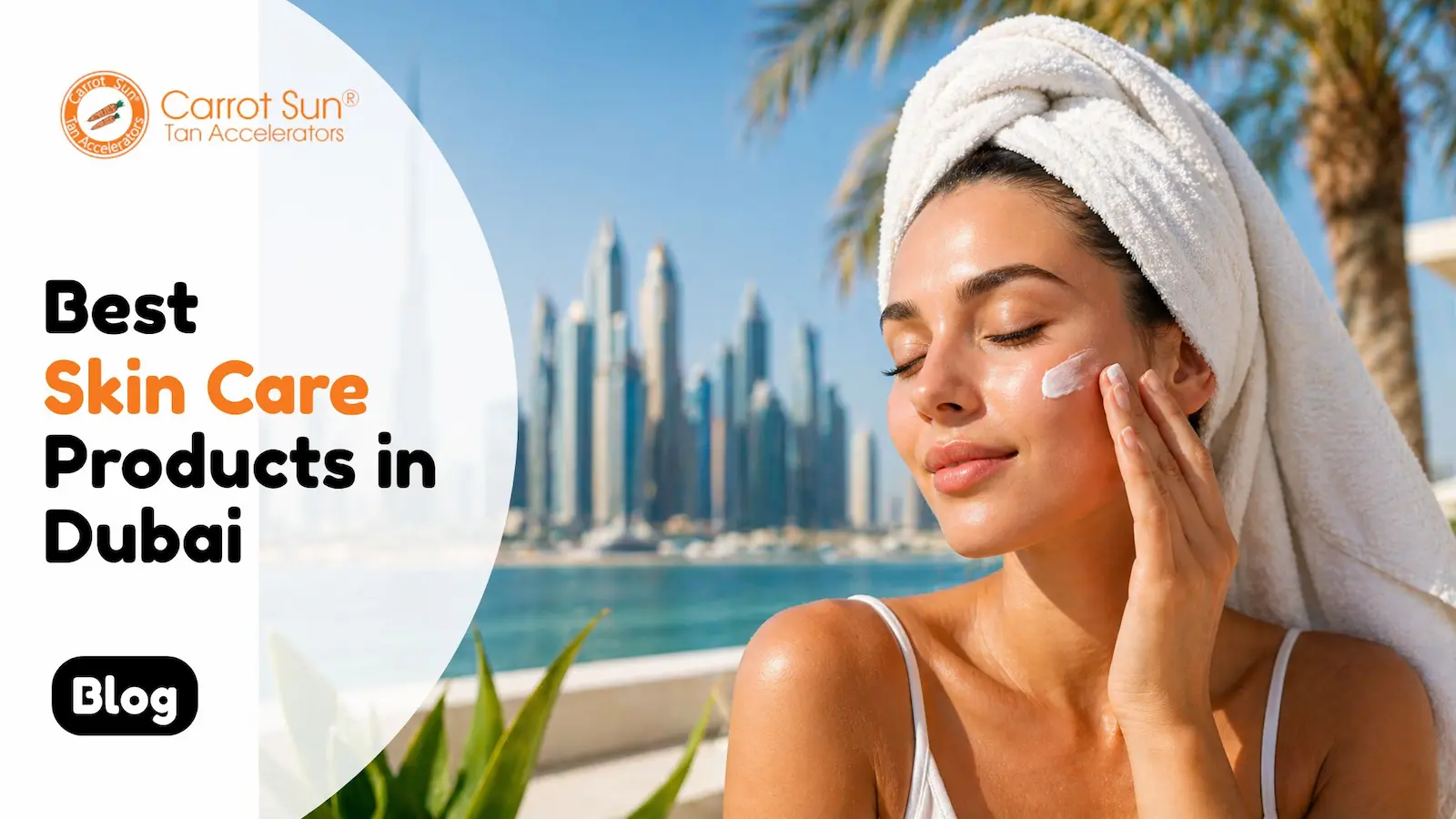
Best Skin Care Products in Dubai (2026)
Most people who move to Dubai go through the same phase. They bring their usual skincare routine, assume it’ll work fine, and spend the next few months confused about why their skin looks worse than it ever did back home.
The cleanser that worked in London leaves their face feeling tight and irritated. The moisturiser that was perfect in Mumbai feels heavy and sticky by 10am. The SPF they trusted in Spain isn’t holding up against a UV index that makes European summers look gentle.
Dubai doesn’t just challenge your skincare routine. It exposes every weakness in it.
This guide explains exactly why — and what the best skin care products in Dubai actually need to do for your skin in 2025.
Why Skincare Works Differently in Dubai
The competitor article we’ve seen from other UAE beauty blogs mentions “heat and AC” in passing. But if you actually live here, you know those two words don’t come close to describing what Dubai does to your skin daily. There are three specific, compounding problems — and most skincare routines only address one of them.
How AC and Desert Heat Damage Your Skin
Picture this: you leave a 19°C office, step into 44°C outdoor heat, grab a coffee, come back inside. You do this eight to ten times a day without thinking about it.
Every single temperature swing disrupts your skin barrier — the thin protective layer that keeps moisture locked in and irritants locked out. Air conditioning removes humidity from indoor air constantly, pulling moisture from your skin while you sit at your desk. The outdoor heat then causes blood vessels to dilate rapidly, triggering redness and inflammation in reactive skin types.
The result is skin that’s simultaneously dehydrated underneath and oily or reactive on the surface. It’s not a product problem — it’s a climate problem. And the solution isn’t layering more products. It’s choosing lighter, faster-absorbing formulas that your skin can actually process through the temperature changes.
Dubai Tap Water and Skin Barrier
This is the one almost every expat skincare guide skips — and it’s one of the most significant factors affecting skin in the UAE.
Dubai’s tap water is heavily desalinated with a high mineral content. Calcium, magnesium, and chlorine levels are significantly higher than in most European, South Asian, or Southeast Asian cities. Every time you wash your face with this water, it disrupts your skin’s natural pH balance, strips natural oils, and leaves a microscopic mineral film on the surface that contributes to dryness, congestion, and sensitivity over time.
If you’ve moved to Dubai and noticed your skin getting progressively more reactive, drier, or breaking out in ways it never did before — the tap water is likely a major part of that equation. The fix is simple: switch to a gentle, low-pH cleanser and use a barrier-repair moisturiser consistently. Your skin will thank you within a few weeks.
Dubai UV Index and Sun Damage
Dubai’s UV index sits between 10 and 13 for most of the year — classified as extreme by the World Health Organisation. At UV 10+, unprotected skin can begin burning in as little as 10 minutes.
What makes this particularly dangerous is the cumulative effect. Each day of unprotected or under-protected exposure adds up: hyperpigmentation deepens, skin tone becomes uneven, premature fine lines develop, and post-inflammatory marks take longer to fade. The casual attitude toward sun protection that’s perfectly reasonable in cooler climates is genuinely risky here.
SPF is not a nice-to-have in Dubai. It is the single most important product in your routine — full stop.
How to Choose Skincare for Dubai Weather
Lightweight vs Heavy
Heavy creams and rich butters are designed for cold, dry climates where your skin needs an occlusive barrier to trap warmth and moisture. In Dubai’s heat, those same products sit on the surface of your skin, trap heat against it, and create the congestion and breakouts that send people running to a dermatologist after their first summer.
The shift most Dubai residents need to make is toward lightweight, fast-absorbing formulas — gel moisturisers, serums, and natural oils that penetrate quickly and hydrate from within rather than sitting on top.
Natural tanning and body oils are a good example of this done right. The Carrot Sun range is built on carrier oils — carrot oil, coconut oil, almond oil — that absorb quickly, nourish without film, and don’t trap heat the way petroleum-based body creams do. That’s not a coincidence. It’s a formulation decision made for exactly this climate.
Natural vs Chemical
In Dubai’s extreme UV environment, the distinction that matters most is between mineral and chemical SPF filters. Chemical filters need time to absorb into the skin to become active — around 20 to 30 minutes. Mineral filters (zinc oxide, titanium dioxide) work immediately on application, making them more reliable for Dubai’s rapid indoor-outdoor transitions.
For body oils and moisturisers, natural ingredient bases consistently outperform synthetic alternatives in high UV and heat conditions. They don’t break down as quickly under prolonged sun exposure, and ingredients like beta-carotene in carrot oil and lycopene in watermelon oil act as natural antioxidants that support skin while you’re tanning.
Best Skin Care Products for Every Skin Type in Dubai
What Works for Dry Skin in Dubai?
Dry skin in Dubai faces a relentless double attack. The outdoor heat pulls moisture through the skin’s surface via evaporation. The AC then strips what little humidity remains from the indoor air. By evening, even well-moisturised dry skin can feel tight, flaky, and uncomfortable.
What dry skin in Dubai needs:
- A non-stripping, low-pH cleanser — if your skin feels “squeaky clean” after washing, the cleanser is too harsh
- A humectant serum with hyaluronic acid or glycerin applied to damp skin
- A barrier-repair moisturiser with ceramides or natural fatty acids applied on top to seal it
- A nourishing body oil on damp skin after showering — applied before the AC has a chance to pull moisture out
- SPF 50 without exception every morning
Carrot Sun Cocoa Butter Tanning Cream is a natural fit for dry skin in Dubai. Cocoa butter’s rich lipid profile forms a protective barrier that actively slows moisture loss while the L-Tyrosine and natural oils accelerate tanning — meaning fewer sun exposure hours needed to achieve the same colour result.
What Works for Oily Skin in Dubai?
Oily skin in Dubai presents a specific paradox that trips up a lot of people. The heat triggers excess sebum production on the surface — your face looks shiny by mid-morning. But the AC simultaneously dehydrates the deeper layers of your skin. The result is skin that’s oily on top but actually dehydrated underneath.
The instinct to skip moisturiser or over-cleanse makes this significantly worse. Stripping the surface sends a signal to produce even more sebum to compensate.
What oily skin in Dubai needs:
- A thorough but gentle gel cleanser — not one that strips completely
- A lightweight, water-based moisturiser — not skipping it
- Niacinamide at 2–5% to regulate sebum production and strengthen the barrier
- A non-comedogenic, matte-finish SPF that holds up in humidity
- A breathable tanning formula for beach days that doesn’t clog pores
The Carrot Sun Watermelon Tanning Spray absorbs almost instantly, leaves no greasy residue, and sits comfortably on oily skin even in Dubai’s coastal humidity. The lycopene content in watermelon oil also provides natural antioxidant support during sun exposure — something no generic gel moisturiser can offer.
Best Options for Sensitive Skin
Sensitive skin in Dubai reacts to the same triggers as everywhere else — synthetic fragrances, harsh exfoliants, alcohol-based formulas. But with the UAE’s extreme UV, AC temperature swings, and hard tap water compounding the irritation, those reactions arrive faster, more intensely, and take longer to calm down.
The non-negotiables for sensitive skin in Dubai:
- Fragrance-free formulas across every step — cleanser, moisturiser, SPF, body product
- Mineral SPF 50 — lower irritation risk than chemical filters on reactive skin
- Patch test every new product 24 hours before use — heat amplifies skin reactions significantly
- A gentle tanning accelerator built on natural soothing oils rather than synthetic bronzers
Carrot Sun Papaya Tanning Cream is built around natural papaya enzymes and a vitamin-rich base with no synthetic fragrance. It’s one of the gentler options in the range and works well for reactive skin that needs to build colour gradually without the irritation risk of stronger formulas.
For the complete sensitive skin tanning guide, read: Tanning Accelerators for Sensitive Skin in UAE
Sun Protection for Kids in UAE
Children’s skin has a thinner outer layer and produces less melanin than adult skin — making it significantly more vulnerable to UV damage. In Dubai’s UV 10+ environment this isn’t a minor concern. It’s a real, cumulative health issue that builds with each unprotected beach day at Kite Beach, Atlantis, or a hotel pool.
Key rules for kids’ sun protection in Dubai:
- Use SPF 50 specifically formulated for children — adult formulas often contain chemical filters too harsh for young skin
- Apply 20 minutes before sun exposure and reapply every 90 minutes
- Cover the commonly missed spots: ears, back of neck, tops of feet
- Keep children out of direct sun between 11am and 3pm — this applies regardless of SPF applied
Carrot Sun Kids SPF 50 provides broad-spectrum UVA and UVB protection in a gentle formula designed specifically for young skin in UAE sun conditions.
Do You Really Need SPF, Tanning Oil and Aftersun in Dubai?
Yes — and they’re not three separate luxuries. They’re three steps of one system, each doing a job the others cannot cover.
Best SPF for Dubai
SPF 50 is the starting point in Dubai, not the premium option. Apply it every morning as the final step of your face routine, 20 minutes before going outside. Reapply every two hours outdoors, immediately after swimming, and after heavy sweating.
Carrot Sun SPF 50 Broad Spectrum Sunscreen covers both UVA and UVB rays — the broad spectrum part matters because UVA rays cause the long-term pigmentation and ageing damage that doesn’t show up immediately but accumulates over years of Dubai living.
Which Tanning Oil Works in Dubai Heat?
A well-formulated tanning oil does two jobs simultaneously: it accelerates melanin production so you achieve the same colour with less sun exposure time, and it nourishes skin with fast-absorbing natural oils during that exposure. Less time in extreme UV is always the better skin health outcome.
Look for L-Tyrosine — the amino acid that feeds melanocytes to produce melanin naturally — and natural carrier oils that hydrate without trapping heat. For the complete guide, read: Best Tanning Oil in UAE
Why Aftersun Is a Must in UAE
The competitor article doesn’t mention aftersun once. That’s a significant gap — because in Dubai’s climate, what happens to your skin after sun exposure matters almost as much as what you do during it.
After a beach day at Kite Beach or Drift Beach Club, your skin has experienced UV stress, moisture loss, and micro-inflammation — even if it doesn’t look or feel burnt. The transition back into AC compounds this immediately. Applying aftersun gel on slightly damp skin after a cool shower locks moisture in before the dry air takes it, calms UV-triggered redness, and preserves the colour you’ve built.
Without this step, tans peel and fade within days in Dubai’s climate. With it, they last. The Carrot Sun Aftersun Face and Body Gel Cream was built specifically for this recovery step.
Tanning Oil or Tanning Cream — Which One Is Right for You?
When Tanning Oil Works Better
- Oily or combination skin types
- Coastal Dubai and Abu Dhabi humidity
- Short beach or pool sessions
- When you want fast absorption and no residue
When Tanning Cream Works Better
- Dry or sensitive skin types
- Inland UAE where desert air is drier
- Longer sun sessions requiring deeper hydration
- Skin that tends to peel after sun exposure
Full breakdown: Tanning Oil vs Tanning Cream UAE
What Is the Best Daily Skin Care Routine for Dubai?
The competitor article gives a solid AM/PM framework. Here’s the same structure adapted specifically for Dubai conditions and the Carrot Sun routine:
Morning:
- Gentle low-pH cleanser or plain lukewarm water rinse
- Lightweight serum — hyaluronic acid or niacinamide
- Light moisturiser or gel cream
- SPF 50 last — applied 20 minutes before going outside
Beach or pool days (add these steps):
- SPF 50 applied 20 minutes before sun exposure
- Carrot Sun tanning oil or cream layered on top after SPF sets
- SPF reapplied every two hours and after every swim
- Tanning oil reapplied after swimming too
Evening:
- Cool shower after sun — not hot
- Aftersun gel applied on damp skin immediately
- Lightweight moisturiser once gel is absorbed
- Targeted actives if needed — retinol or niacinamide 2–3 nights per week
Weekly:
- Gentle exfoliation 48 hours before tanning sessions
- Hydrating mask after heavy sun days or long flights
- Skip exfoliation for 72 hours after tanning to lock in colour
For the full tanning routine: How to Tan Safely in UAE
Skin Care Mistakes Most People Make in Dubai
The competitor article lists some valid mistakes. Here are the Dubai-specific ones they missed:
- Using no SPF on cloudy days — UAE cloud cover offers zero UV protection. The index barely drops.
- Skipping aftersun after beach club days — a few hours at Drift Beach or Zero Gravity depletes skin moisture more than most people realise
- Over-exfoliating in summer — AHAs and BHAs on heat-stressed, barrier-compromised skin cause hyperpigmentation to worsen rather than improve
- Applying heavy cream over sweaty skin — it sits on the surface, blocks pores, and causes the breakouts you’re trying to prevent
- Forgetting kids’ SPF reapplication — one application at 10am does nothing by 1pm at Atlantis The Palm
- Using tanning oil without SPF — in UV 11+ conditions this causes burns, not tans
- Ignoring tap water effects — switching cleanser costs almost nothing and makes a visible difference within weeks
Where to Buy Carrot Sun in Dubai
The complete Carrot Sun range — SPF 50, tanning creams and oils, aftersun gel, and kids’ SPF 50 — is available online at carrotsunoil.com with delivery across the UAE.
Every product in the range is formulated for the Gulf’s extreme UV conditions. Not for European beach holidays. Not for generic hot weather. For here — Dubai, Abu Dhabi, Sharjah, and the UAE coast — where the sun is stronger, the air is drier, and your skin needs products that were actually built for this environment.
FAQs
What skin care products do I actually need in Dubai?
At minimum: a gentle low-pH cleanser, a lightweight moisturiser, SPF 50, and an aftersun gel for beach or pool days. Dubai’s UV index, AC dehydration, and hard tap water each attack your skin differently — a standard two-step routine doesn’t address all three. If you’re spending time outdoors, add a natural tanning oil layered over your SPF for protection and nourishment during sun exposure. Keep formulas lightweight and fast-absorbing.
Is SPF necessary every day in Dubai?
Yes — every day without exception, including winter, cloudy days, and indoors near windows. Dubai’s UV index stays between 6 and 9 even in December — classified as “high” by WHO standards. UV rays penetrate glass and cloud cover fully. Applying SPF 50 daily is the single most effective anti-ageing and skin-protection habit you can build in the UAE. Under-applying halves protection — use a generous amount on face, neck, and ears every morning.
Does Dubai tap water really damage your skin?
Yes, significantly. Dubai’s desalinated tap water contains high levels of calcium, magnesium, and chlorine that disrupt your skin’s natural pH, strip natural oils after washing, and leave a mineral film that contributes to dryness and sensitivity over time. Switching to a gentle, low-pH cleanser and using a barrier-repair moisturiser consistently counteracts most of this effect. Many expats notice a visible improvement in skin texture and reactivity within two to four weeks of making this single change.
Are natural tanning oils good for skin in UAE?
Yes — when used correctly. Natural tanning oils built on L-Tyrosine and carrier oils like carrot oil, coconut oil, and almond oil accelerate melanin production naturally, meaning you need less UV exposure time to achieve the same colour depth. Their natural oil bases hydrate and nourish skin during sun exposure without synthetic irritants. Always apply over SPF 50 in Dubai’s UV 11+ environment. Never use any tanning oil without sunscreen underneath in the UAE.
How do I keep my skin hydrated in Dubai heat?
Apply moisturiser or body oil on slightly damp skin immediately after showering before dry air pulls moisture out. Use lightweight fast-absorbing formulas rather than heavy creams. Drink water consistently through the day. Use aftersun gel after any sun exposure rather than waiting until bedtime. Switch to a low-pH cleanser to stop morning washing from stripping your skin’s natural oils. A desk humidifier in heavily air-conditioned offices makes a notable difference for skin that feels persistently tight and dull.
Is Carrot Sun safe for kids in UAE?
Yes — Carrot Sun Kids SPF 50 is formulated specifically for young skin with broad-spectrum UVA and UVB protection in a gentle formula without harsh chemical ingredients. Apply 20 minutes before sun exposure and reapply every 90 minutes during outdoor activity. Cover commonly missed areas — ears, back of neck, and tops of feet. Keep children out of direct Dubai sun between 11am and 3pm regardless of SPF applied. One morning application is not sufficient for a full beach day.
About author

Add comment