


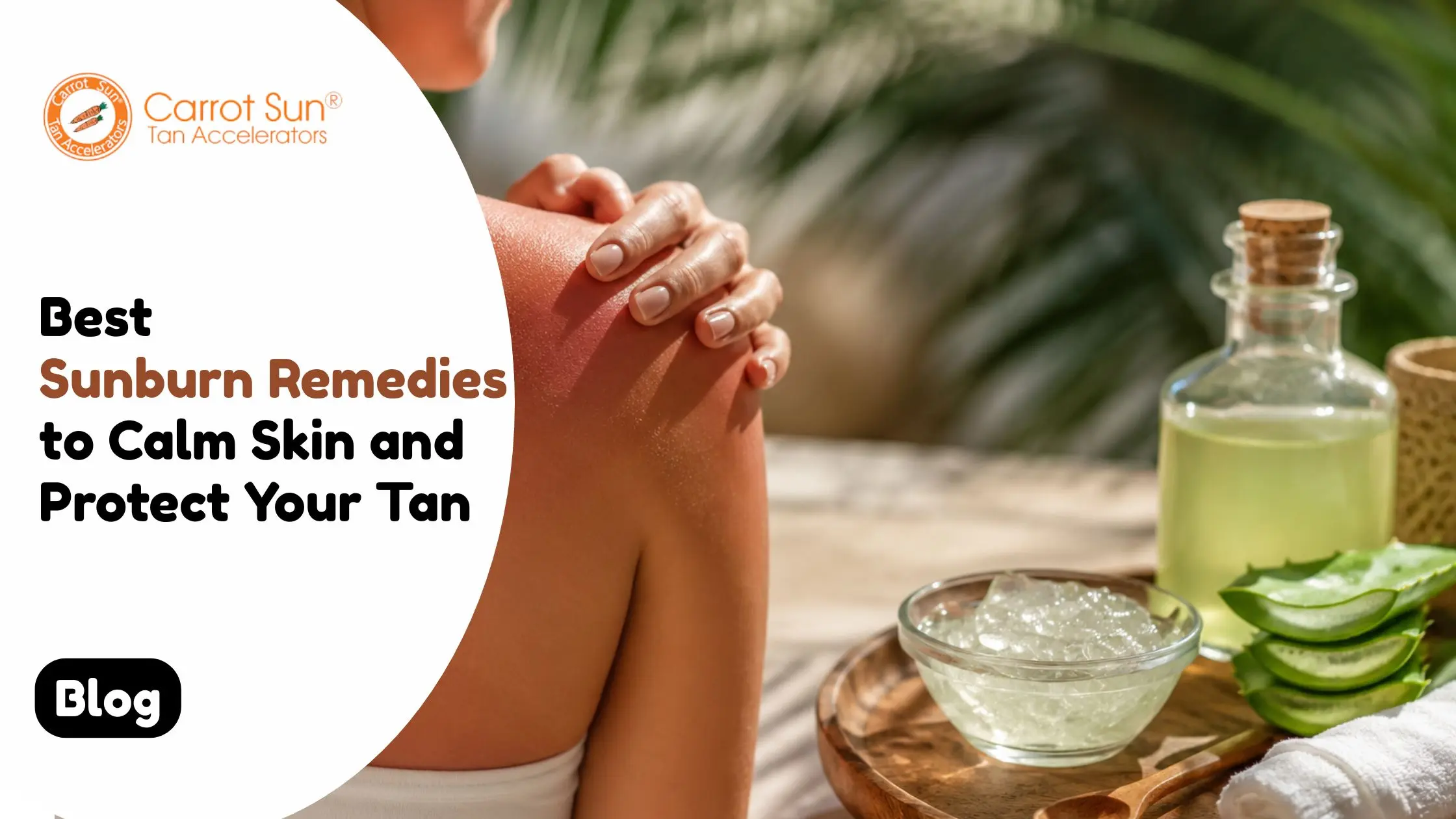
Best Sunburn Remedies to Calm Skin and Protect Your Tan
You spent the afternoon at Jumeirah Beach. The sun felt incredible, but by evening, your skin is radiating red. You weren’t just seeking pain relief—you were trying to save your tan. This is the sunburn paradox most UAE residents face. In a climate where temperatures exceed 40°C and UV intensity hits double digits, sunburn isn’t just uncomfortable. It threatens your glow.
But here’s the good news: effective sunburn remedies exist—designed specifically for UAE’s extreme heat. Standard remedies fall short in desert climates. The intense heat, low humidity, and salt water exposure accelerate dehydration and extend inflammation far longer than temperate regions. That’s why knowing the right sunburn remedies matters.
How to Treat Sunburn Immediately for Fast Relief
The First 24 Hours Are Critical
When you first notice sunburn, your skin is experiencing thermal shock. UV damage has triggered inflammation, and your skin’s temperature is elevated. In the UAE, ambient temperatures often prevent the skin from cooling naturally, meaning the burn can continue damaging deeper skin layers long after you’ve stepped indoors.
Immediate Action Steps:
- Move to cool environment — Get indoors or into shade immediately
- Cool shower (10-15 minutes) — Lukewarm water, never ice-cold (extreme cold constricts blood vessels and traps heat deeper)
- Pat skin dry gently — Never rub
- Apply lightweight after-sun gel — Look for aloe vera or wheat germ oil
- Hydrate aggressively — Drink 1-2 liters of electrolyte-rich water within the first hour
Why Hydration Matters:
Sunburn draws fluid to the skin’s surface, leaving you dehydrated at a systemic level. In UAE’s desert climate, this dehydration is accelerated. Electrolyte-rich water (coconut water, sports drinks, or sea salt-infused water) helps your body retain hydration better than plain water alone.
Products to Avoid in First 24 Hours:
Petroleum-based ointments, heavy oils, and thick creams seal heat against inflamed skin, prolonging redness and inflammation. These create a thermal trap that makes burns worse.
The Science of Skin Recovery in the UAE Climate
Understanding Desert Heat Damage
Sunburn in the UAE isn’t like sunburn elsewhere. The desert’s intense heat creates extreme Transepidermal Water Loss (TEWL)—your skin loses moisture dramatically faster than in humid climates. This is compounded by several factors unique to Arabian conditions.
What Makes UAE Sunburns Worse:
| Factor | Impact | Solution |
|---|---|---|
| Extreme heat (40°C+) | Continues heat damage beyond UV exposure | Cool compresses every 30 minutes for 24 hours |
| Low humidity | Accelerates water evaporation from skin | Drink 3-4 liters of water daily for 5-7 days |
| Salt water (Arabian Gulf) | Crystallizes on skin, draws out moisture | Rinse immediately with cool water after swimming |
| Reflected UV rays | Sand, concrete, water amplify exposure | Use SPF 50 even during recovery phase |
| Desert wind | Increases moisture loss further | Stay indoors during peak heat (11 AM-3 PM) |
The Melanocyte Challenge:
Melanocytes (cells responsible for your tan) become unstable under extreme thermal stress. If you don’t use professional after-sun treatment, these pigment-producing cells shed prematurely, taking your golden glow with them. This is why tan-specific recovery protocols matter in the UAE.
Natural Sunburn Remedies for Cooling Inflamed Skin
Immediate Cooling Techniques
Cold Compress Method (Most Effective):
- Soak clean cloth in cool (not cold) water
- Apply to affected areas for 10-15 minutes
- Remove, let skin air-dry briefly
- Reapply after 30 minutes
- Repeat 4-5 times during day one
This cooling effect reduces inflammation without shocking the skin. Think of it as giving your skin a soothing, repeating break from heat absorption.
Natural Remedies That Work:
Aloe Vera Gel — Clinically proven to accelerate healing. Contains polysaccharides and antioxidants that fight inflammation, boost skin cell regeneration, and provide hydration without trapping heat. Apply pure aloe vera (refrigerated for extra cooling) 2-3 times daily.
Chilled Cucumber Slices — Natural astringent and hydrating. Apply for 10 minutes. Works best for facial burns.
Cold Chamomile Tea Compresses — Chamomile contains bisabolol, a natural anti-inflammatory. Steep tea, refrigerate, then apply-soaked cloth to sunburn.
Professional Alternative:
For best results, use Carrot Sun After-Sun Gel. It combines immediate cooling benefits of a gel with reparative power of natural oils, making it ideal for UAE’s demanding climate.
Essential After-Sun Care to Prevent Peeling Skin
Days 2-7: The Peeling Prevention Phase
Peeling is your body shedding damaged cells—actually good news. The problem is aggressive peeling can strip healthy skin underneath, leaving patchy, uneven tone and ruining your tan permanently.
The Peeling Prevention Protocol:
| Day | Action | Why It Matters |
|---|---|---|
| Day 1 | Cool compresses, lightweight gels, hydration | Stop inflammation and heat damage |
| Day 2 | Switch to richer moisturizer, Vitamin E products | Support skin cell regeneration |
| Days 3-5 | Intensive moisturizing (morning and night) | Lock hydration, prevent peeling |
| Days 5-7 | Continue moisturizing, introduce SPF 30 | Stabilize color, protect healing skin |
What NOT to Do:
Skip exfoliation completely—no loofahs, scrubs, or chemical peels. Keep showers lukewarm, never hot, as heat accelerates inflammation. Avoid heavy oils in the first 24 hours; they trap heat and prolong redness. Steer clear of tight clothing over burned areas; let skin breathe in loose, cotton garments. Never pick or pull at peeling skin—let it shed naturally.
Moisturizer Formula for Recovery:
Look for products containing Vitamin E and Wheat Germ Oil. These support skin cell regeneration and lock hydration without feeling heavy. Carrot Sun After-Sun Gel combines aloe vera for continued anti-inflammatory support with wheat germ oil and Vitamin E for skin cell regeneration.
Apply to damp skin (right after lukewarm shower) morning and night for 3-5 days. This seals in moisture and speeds barrier repair.
Sunburn Recovery Timeline and Hydration Strategy
The 7-Day Recovery Window
Hours 0-12: Emergency Cooling Phase
Immediate focus: stop the inflammatory cascade. Use cool compresses every 30 minutes, drink electrolyte water constantly, avoid all heat sources (hot showers, tight clothing, exercise, sun exposure). Your skin is still “cooking” from internal heat.
Days 2-3: Inflammation Peak
Redness peaks around 24-48 hours. This is when peeling threatens to begin. Switch from lightweight gels to richer moisturizers with Vitamin E and wheat germ oil. Avoid exfoliation completely. Drink 3-4 liters of water daily with electrolytes.
Days 4-7: Barrier Repair and Color Stabilization
Redness begins fading. Peel may still occur—let it shed naturally. Continue intensive moisturizing. After day 3, introduce SPF 30 if you must be outdoors. By day 5-7, redness should be mostly gone and skin ready for cautious sun exposure.
Hydration Protocol:
- Day 1: 3-4 liters of water (including electrolytes)
- Days 2-7: 2.5-3 liters daily
- Include: Coconut water, sports drinks, or sea salt-infused water
Sunburn causes your body to redirect blood and fluid to the skin’s surface for healing. Depriving yourself of water means slower healing and delayed tan recovery.
Protecting Your Tan While Healing a Sunburn
The Tan-Preservation Strategy
Your sunburn doesn’t mean you’ve “lost” your tan. The redness is inflammation; your tan is underneath. The key is not stripping it away during recovery.
Tan-Killers to Avoid:
- Harsh exfoliants (chemical peels, scrubs, loofahs)
- Hot showers (dry skin and encourage peeling)
- Heavy oil-based products in first 24 hours (uneven fading)
- Chlorinated pools (chlorine dries skin and causes patchy fading)
Tan-Protectors to Use:
- Lightweight hydrating moisturizers (lock color in place)
- Consistent internal hydration (keeps skin plump and color-rich)
- Gentle, fragrance-free products (no irritation = no accelerated peeling)
- Sunscreen after day 3 (prevents uneven darkening)
The Transition Back to Tanning:
Once redness is gone (typically days 5-7), skin is ready for cautious tanning—but not at full intensity. Sunburned skin is temporarily photosensitive.
- Days 5-7: Start with 30-minute sessions using SPF 30
- Week 2: Gradually increase duration over 7 days
- Week 3+: Return to normal tanning routine
Using SPF while tanning allows gradual color building safely. Once baseline tolerance returns, you can learn how to use tanning oil the right way to deepen your glow without repeating burn cycles.
Tan-Friendly Sunburn Remedies for Beach and Outdoor Lifestyle
Prevention-First Protocol
The best sunburn remedy is never getting one. If you’re a regular beach-goer, develop a protective routine.
Pre-Beach Preparation:
- Apply Carrot Sun SPF 50 15 minutes before sun exposure (needs time to bond with skin)
- Reapply every 2 hours if in water or sweating
- Use SPF 50 on face, SPF 30+ on body
- Wear UV-blocking cover-ups during 11 AM-3 PM peak hours
- Time sessions for early morning (7-9 AM) or late afternoon (5-7 PM)
Post-Beach Recovery Action:
- Rinse salt water immediately with lukewarm water
- Apply cool compress for 15 minutes
- Drink 1 liter of water with electrolytes within the hour
- Apply after-sun gel to any red or warm areas
Optimal Weekly Beach Routine:
- Monday/Wednesday/Friday: Beach days with full SPF protection
- Tuesday/Thursday: Indoor recovery days (heavy moisturizing, no sun)
- Weekends: Light sun exposure only (morning or evening) with SPF
This rhythm allows skin to build color gradually while recovering between sessions. You’ll end up with better, more even results than pushing hard every day.
Mistakes to Avoid When Treating Sun-Damaged Skin
Common Errors That Make Burns Worse
Mistake #1: Using Ice Directly on Skin
Why it’s wrong: Extreme cold constricts blood vessels, trapping heat deeper in the dermis. It can also cause ice burn—crystallization of skin cells on already damaged tissue.
The fix: Use cool (not cold) water, refrigerated aloe, or cool compresses. Your skin should feel refreshed, not shocked.
Mistake #2: Applying Heavy Oils in First 24 Hours
Why it’s wrong: Heavy oils seal heat against inflamed skin, creating a thermal trap. This prolongs redness and can actually deepen the burn.
The fix: Use lightweight gels with cooling properties in first 24 hours (aloe, gel-based serums). Switch to richer moisturizers on day 2.
Mistake #3: Aggressive Exfoliation or Peeling
Why it’s wrong: You manually remove skin still healing underneath. This causes uneven tan fading, exposes raw skin, and can lead to infection in UAE’s humid climate.
The fix: Let skin shed naturally. Moisturize to support the process, but don’t force it. Exfoliate only when skin is fully healed (7+ days).
Mistake #4: Skipping Sunscreen “To Keep Tanning”
Why it’s wrong: You risk deepening the burn or creating uneven tone. Plus, sun damage makes future burns more likely.
The fix: Use SPF 30-50 during recovery phase (days 3-7). You’ll still tan safely.
Mistake #5: Ignoring Hydration
Why it’s wrong: Internal dehydration = slower healing, increased peeling, delayed tan recovery.
The fix: Drink 3+ liters day one, then 2.5+ liters daily for a week.
Understanding What Tanning Oil Does During Recovery
Can You Use Tanning Oil on Sunburn?
No. Tanning oils applied to fresh sunburn can trap heat and accelerate inflammatory response. However, understanding what tanning oil does helps you prepare for post-healing tanning.
Tanning oils work by absorbing UV rays and directing them into deeper skin layers, triggering melanin production. They also provide antioxidant protection and hydration. But on inflamed, thermally-stressed skin, they create the opposite effect—trapping heat and slowing healing.
The timeline: Once redness is completely gone and skin is cool to touch (days 5-7), tanning oils become beneficial. They accelerate melanin production while supporting skin’s barrier function, helping you deepen your tan safely after recovery.
When to Seek Medical Attention for Severe Sunburn
Red Flags Requiring Professional Care
Seek immediate medical attention for:
- Severe blistering covering more than 20% of body
- Fever or chills (sun poisoning symptoms)
- Extreme pain unrelieved by cool water or over-the-counter pain relief
- Dizziness, nausea, or confusion (heat stroke)
- Eye pain or vision changes (corneal burn)
- Signs of infection: increased warmth, pus, spreading redness
In the UAE, clinics like Aster, BinSina, or your family medicine doctor can assess severe burns and provide IV hydration or prescription treatments if needed.
Comprehensive Sunburn Recovery Checklist
Before the Beach:
- Apply SPF 50 to face, SPF 30+ to body
- Reapply after 2 hours or after swimming
- Wear UV-blocking cover-up for peak sun hours (11 AM-3 PM)
- Pack water and electrolyte drinks
- Choose early morning (7-9 AM) or late afternoon (5-7 PM) sessions
- Wear sunglasses and hat
During the Beach:
- Reapply sunscreen every 2 hours
- Drink water consistently (not just when thirsty)
- Take 15-minute shade breaks every hour
- Rinse off salt water during the day if possible
Immediately After Beach:
- Rinse with lukewarm water
- Apply cool compress for 15 minutes
- Drink 1 liter of water with electrolytes within the hour
- Apply lightweight after-sun gel (not heavy oils)
Days 2-3 Recovery:
- Switch to richer moisturizer with Vitamin E and wheat germ oil
- Avoid hot showers and harsh products
- Drink 2.5-3 liters of water daily
- Wear loose, breathable cotton clothing
- Skip exfoliation and heavy makeup
Days 4-7 Tan Preservation:
- Continue moisturizing consistently
- Use SPF 30 if sun exposure is necessary
- Gradually return to normal sun exposure (start with 30 minutes)
- Once redness is gone, transition back to tanning oil routine safely
How Carrot Sun Supports Healthy Tanning and Recovery
A System, Not Just a Product
Carrot Sun isn’t just about achieving glow—it’s about doing it safely. Our philosophy: you shouldn’t choose between looking good and feeling good.
The Three-Phase System:
Phase 1 – Prevention: Carrot Sun SPF 50 broad-spectrum protection designed for UAE’s intense UV. Lightweight, water-resistant, and won’t interfere with natural tanning ability.
Phase 2 – Recovery: After-Sun Gel combines aloe vera for anti-inflammatory support with wheat germ oil and Vitamin E for skin repair. Breathable formula perfect for UAE’s humid climate.
Phase 3 – Maintenance: Once healed, our tanning oils are formulated to support skin health while building color safely. Lightweight enough for recovering skin without irritation.
The philosophy is simple: protection → recovery → maintenance. It’s a cycle that keeps your skin healthy and your tan looking incredible.
Final Thoughts: From Sunburn to Glow
Sunburn is a setback, not a failure. Every sun-lover in the UAE has experienced it. The difference between beautiful recovery and patchy damage comes down to what you do in the first 48 hours.
Now you know the science. You know the remedies. You know the mistakes to avoid. Your next beach day will be different. You’ll go in with SPF protection, recover smartly, and transition back to tanning safely. Your skin will thank you—and your tan will be more even, longer-lasting, and genuinely healthy.
Start with Carrot Sun SPF 50 for your next beach day. Because looking good and feeling good aren’t competing goals. They’re the same goal.
Shop our complete collection of tanning and after-sun care solutions designed for UAE’s intense climate at Carrot Sun Shop.
Frequently Asked Questions
How do you get rid of sunburn quickly?
The fastest relief combines cool water (not ice), hydration, and lightweight gels with aloe vera. Apply cool compresses for 15 minutes repeatedly, drink water aggressively (3+ liters daily), and use aloe-based gels 2-3 times daily. Redness typically reduces within 48 hours with proper care. Avoid heat, hot showers, and heavy creams in the first 24 hours—these trap inflammation.
What is the fastest way to soothe sunburn naturally?
Aloe vera is clinically proven most effective—apply refrigerated pure aloe gel 2-3 times daily. Pair with cool compresses (10-15 minutes every 30 minutes), aggressive hydration with electrolytes, and lightweight breathable products. Cold oatmeal baths help systemic relief by soothing widespread burns. Avoid petroleum-based ointments that trap heat.
How do you stop peeling after sunburn?
Peeling is natural healing, but you can minimize it by: avoiding exfoliation completely, moisturizing obsessively with Vitamin E and wheat germ oil products starting day 2, using lukewarm not hot water for showers, and staying hydrated internally. Let loose skin shed naturally—don’t pick or pull. Heavy moisturizing from day 2 onward significantly reduces visible peeling.
Is aloe vera good for sunburn relief?
Yes. Aloe contains polysaccharides and antioxidants that reduce inflammation, speed skin cell regeneration, and provide hydration. It’s lightweight, doesn’t trap heat, and is clinically supported for sunburn treatment. Use pure aloe gel rather than diluted commercial versions. Apply 2-3 times daily, refrigerated for extra cooling effect.
What should I apply after tanning in the sun?
Apply lightweight after-sun gel immediately within 30 minutes. Look for formulations with aloe vera, wheat germ oil, or Vitamin E. Avoid heavy oils in the first 24 hours as they trap heat. Apply to damp skin for better absorption. From day 2, switch to richer moisturizers locking hydration and protecting tan. Avoid harsh products and hot water.
Can I tan again after getting sunburned?
Yes, with care. Wait until redness completely fades (typically 5-7 days) before returning to sun. Start conservatively with 30-minute sessions using SPF 30, gradually increasing duration over a week. Sunburned skin is temporarily photosensitive, so patience prevents another burn cycle.
What is the difference between tanning oil and tanning cream?
Tanning oils are lighter and faster-absorbing, ideal for oily or acne-prone skin. Tanning creams provide richer hydration, better for dry skin types. Both work during recovery, but choose based on skin type and climate preferences. Oils offer more elegant absorption in UAE heat; creams provide superior moisture-locking for sensitive, post-burn skin.
How long does it take for sunburn to heal completely?
Redness peaks at 24-48 hours, gradually fading over 3-7 days with proper care. Peeling may continue for 5-10 days as skin naturally sheds damaged cells. Full skin barrier recovery (return to baseline sensitivity) takes 2-3 weeks. Aggressive hydration, moisturizing, and sun protection during this period accelerate healing and prevent complications.
About author

Add comment