


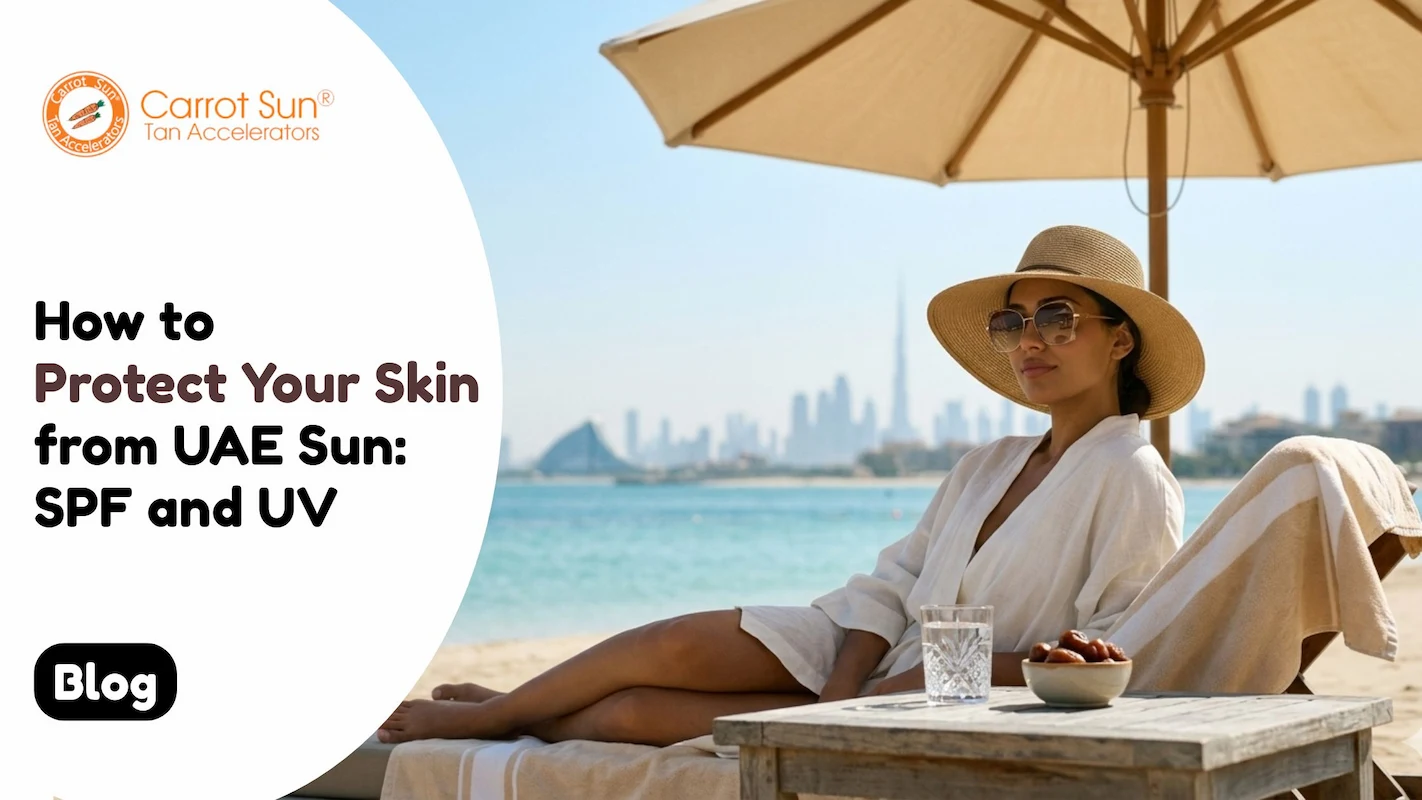
How to Protect Your Skin from UAE Sun: SPF and UV Safety Guide
Protecting your skin from UAE sun is not optional — it is the most important skincare habit you can build living in the Gulf.
The UAE’s UV index sits between 10 and 13 from May to September. That means unprotected skin can begin burning in under 15 minutes. Most residents underestimate this until they experience their first proper burn at Kite Beach or JBR. The right SPF routine, combined with a smart tanning approach, keeps your skin healthy while still letting you enjoy the sunshine you moved here for.
This guide covers everything you need — from choosing the right SPF for Dubai’s humidity to building a complete protection and recovery routine.
Why UAE Sun Damages Skin Faster Than Anywhere Else
Dubai and Abu Dhabi sit close to the equator. UV rays travel a shorter path through the atmosphere here than in Europe or North America, which means they hit your skin with significantly higher intensity.
Two types of UV rays cause damage:
- UVA rays penetrate deep into the skin and cause premature ageing, hyperpigmentation, and collagen breakdown over time
- UVB rays cause immediate burning and surface damage
Both are present year-round in the UAE — not just in summer. Even in December, the UV index regularly sits at 6 to 8, which is classified as high by WHO standards. Daily SPF is non-negotiable here regardless of season.
For a complete seasonal skin care approach, read our guide on best skin care products in Dubai.
How to Choose the Right SPF for UAE Climate
Not all sunscreens perform the same in the UAE. The climate creates two specific challenges that most international SPF products were not designed for.
Coastal humidity. Dubai Marina and JBR regularly exceed 80% humidity in summer. Standard sunscreens slide off sweating skin within 30 minutes. You need a water-resistant, broad-spectrum formula that bonds to the skin despite perspiration.
Desert dry heat. Inland areas and air-conditioned environments strip moisture from your skin barrier constantly. Heavy occlusive sunscreens clog pores in heat. Lightweight, fast-absorbing formulas work better here.
The rule for UAE: Use SPF 50 as your minimum for any outdoor activity. SPF 30 is adequate for brief indoor-to-outdoor transitions. For beach days, pool sessions, or any time you are outdoors for more than 20 minutes, SPF 50 is the only sensible choice.
Carrot Sun SPF 50 Broad Spectrum Sunscreen is formulated specifically for UAE conditions — broad-spectrum UVA and UVB protection in a lightweight formula that does not trap heat or clog pores in humidity.
Image suggestion: Side-by-side showing SPF application in coastal Dubai humidity vs desert inland heat — visually explains why formula texture matters.
SPF vs Tanning Oil — Do You Need Both?
Yes. And this is the most important point in this entire guide.
Tanning oils and SPF serve completely different functions. Tanning oils accelerate your skin’s natural melanin production — they help you tan faster and deeper. SPF filters harmful UV rays to prevent burning and DNA damage. Neither one replaces the other.
The correct approach in UAE:
- Apply SPF 50 to all exposed skin
- Wait 20 minutes for it to fully absorb and bond to your skin
- Apply Carrot Sun tanning oil or cream on top
- Reapply SPF every two hours and after every swim
Using a natural tanning accelerator over SPF means you achieve deeper colour with less total sun exposure time. Less UV exposure is always the better skin health outcome — especially in UAE’s extreme UV environment.
For the complete layering guide, read: How to Tan Safely in UAE
Safe Tanning Windows in UAE
Timing reduces your UV damage risk more than any product alone.
Safe windows:
- Morning: 8:00 AM to 10:30 AM
- Late afternoon: 4:00 PM to 6:00 PM
Avoid direct tanning: 11:00 AM to 3:00 PM
During peak hours the UV index in UAE regularly exceeds 11. Even with SPF 50 applied correctly, prolonged exposure in this window accumulates damage faster than your skin can repair it.
Start with 15 to 20 minute sessions in the safe windows and build gradually. Consistent shorter sessions produce a deeper, more even tan than one long aggressive beach day.
Sun Protection for Kids in UAE
Children’s skin is thinner and produces less melanin than adult skin. In UAE’s UV 11+ environment, this is a genuine health concern — not just a precaution.
Key rules for kids’ sun protection:
- Use SPF 50 formulated specifically for children
- Apply 20 minutes before sun exposure
- Reapply every 90 minutes during outdoor activity
- Cover ears, back of neck, and tops of feet
- Keep children out of direct sun between 11 AM and 3 PM
Carrot Sun Kids SPF 50 provides broad-spectrum UVA and UVB protection in a gentle formula designed for young skin. One application at 10 AM does not cover a full day at Atlantis or Wild Wadi — reapplication every 90 minutes is essential.
Aftersun Care — The Step Most People Skip
Even perfect SPF application does not eliminate all UV stress. After any sun exposure in the UAE, your skin has experienced micro-inflammation, moisture loss, and surface barrier disruption.
What happens without aftersun care:
- Moisture is stripped rapidly by UAE’s dry air and air conditioning
- Micro-inflammation deepens overnight
- Tan begins to peel within 2 to 3 days
What happens with proper aftersun care:
- Moisture is locked in before dry air removes it
- Inflammation is calmed before it develops further
- Tan colour is preserved for 7 to 10 days
Apply Carrot Sun Aftersun Face and Body Gel Cream on slightly damp skin immediately after a cool shower. The damp skin application method absorbs the gel more effectively and seals moisture in before the AC environment removes it.
For sensitive skin recovery after UAE sun exposure, read: Top 5 Tanning Accelerators for Sensitive Skin in UAE
Your Complete UAE Sun Protection Routine
| Step | Product | When |
| SPF 50 application | Carrot Sun SPF 50 | 20 minutes before going outside |
| Tanning oil over SPF | Carrot Sun Oil or Cream | After SPF has fully absorbed |
| SPF reapplication | Carrot Sun SPF 50 | Every 2 hours outdoors |
| Aftersun gel | Carrot Sun Aftersun Gel | On damp skin after cool shower |
| Daily moisturiser | Natural body oil | Every morning and evening |
Shop the complete Carrot Sun SPF and sun care range
Frequently Asked Questions
Is SPF 30 enough for Dubai summer?
For brief indoor to outdoor movements, SPF 30 provides adequate protection. For any beach day, pool session, or outdoor activity lasting more than 20 minutes between May and September, SPF 50 is strongly recommended. UAE’s UV index regularly exceeds 10 in summer, meaning skin burns in half the time it would in Europe. When in doubt, always choose the higher protection factor.
How do I remove a sun tan fast in the UAE?
Focus on gentle exfoliation 72 hours after tanning, followed by a brightening moisturiser. Avoid harsh chemical peels immediately after sun exposure as skin is already stressed. Consistent daily moisturising, staying hydrated, and avoiding chlorinated pools for 48 hours slows fading naturally.
What is the best tanning oil for safe glowing skin in UAE?
The best tanning oil for UAE contains L-Tyrosine and natural carrier oils like carrot oil, almond oil, and coconut oil. These ingredients activate your skin’s natural melanin production, delivering a deep golden colour with less total UV exposure time. Always layer it over SPF 50 — never use tanning oil without sunscreen in UAE’s extreme UV conditions.
Why is my skin so dry after tanning in UAE?
Salt water, chlorine, and UAE’s low-humidity air all strip natural lipids from your skin after sun exposure. The AC environment compounds this by removing moisture from the air continuously. Apply aftersun gel on damp skin immediately after showering, moisturise daily with a natural body oil, and drink at least 2.5 litres of water. Carrot Sun’s wheat germ oil base provides antioxidant support that specifically counteracts this type of post-sun dehydration.
How long should I stay in the UAE sun with SPF 50?
SPF 50 blocks approximately 98% of UVB rays and significantly extends your safe exposure time, but it does not make sun exposure unlimited. In UAE’s UV 11+ environment, reapply every two hours regardless of how you feel. Take shade breaks every 30 to 45 minutes during beach or pool sessions. The safest approach is tanning in the morning window before 10:30 AM and the late afternoon window after 4:00 PM when UV intensity drops significantly.
Read next: How to Get Glowing Skin in UAE
About author

Add comment